Liquid Gold or Sugar Trap? The Medicine 3.0 Truth About Fruit Juice and Lipid Management
Is your morning juice sabotaging your heart health? Discover why 'liquid fruit' fails the lipid management test and how Medical Nutrition Therapy (MNT) can slash LDL-C by up to 22%.
Optimizing your metabolic health begins with understanding that liquid calories are not biologically equivalent to whole foods, as emphasized by clinical guidelines from MOH Malaysia and the WHO.
Key Takeaways: Clinical Data Comparison
| Key Dimension | Clinical Standards & Data Context | Business Impact |
|---|---|---|
| LDL-C Reduction | -7% to -22% via systematic MNT | Comparable to low-dose statin therapy, enhancing treatment ROI. |
| TG Reduction | -11% to -31% through early dietary intervention | Critical for managing Atherogenic Dyslipidemia and liver health. |
| Daily Fiber Target | 20 - 30 g total (7 - 13 g Viscous Fibre) | Essential biological pathway for binding bile acids and lowering ApoB. |
| Trans Fat Limit | < 1% of total daily energy intake | The minimum clinical threshold for global cardiovascular protection. |
| Obesity Threshold | BMI ≥ 27.5 kg/m² (Asian Cut-off) | Triggers earlier screening for metabolic dysfunction in Asian phenotypes. |
1. Patient Misconceptions: Why Your ‘Fresh’ Juice is Hindering Lipid Recovery
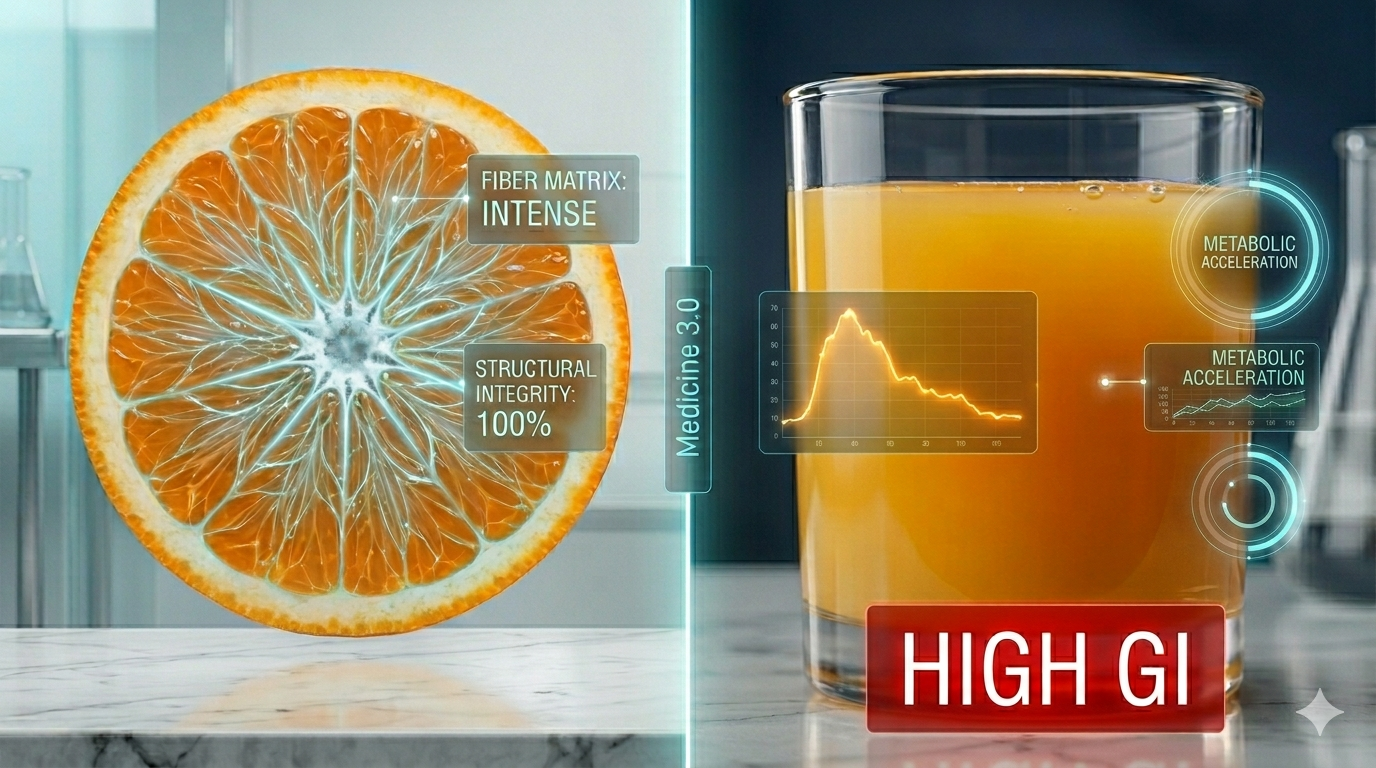
Direct Answer: Many patients believe “no-added-sugar” juice is a healthy substitute for fruit, but the juicing process removes the fiber matrix, causing a surge in Glycaemic Index (GI) and Post-Prandial Glucose (PPG) that drives lipid dysfunction.
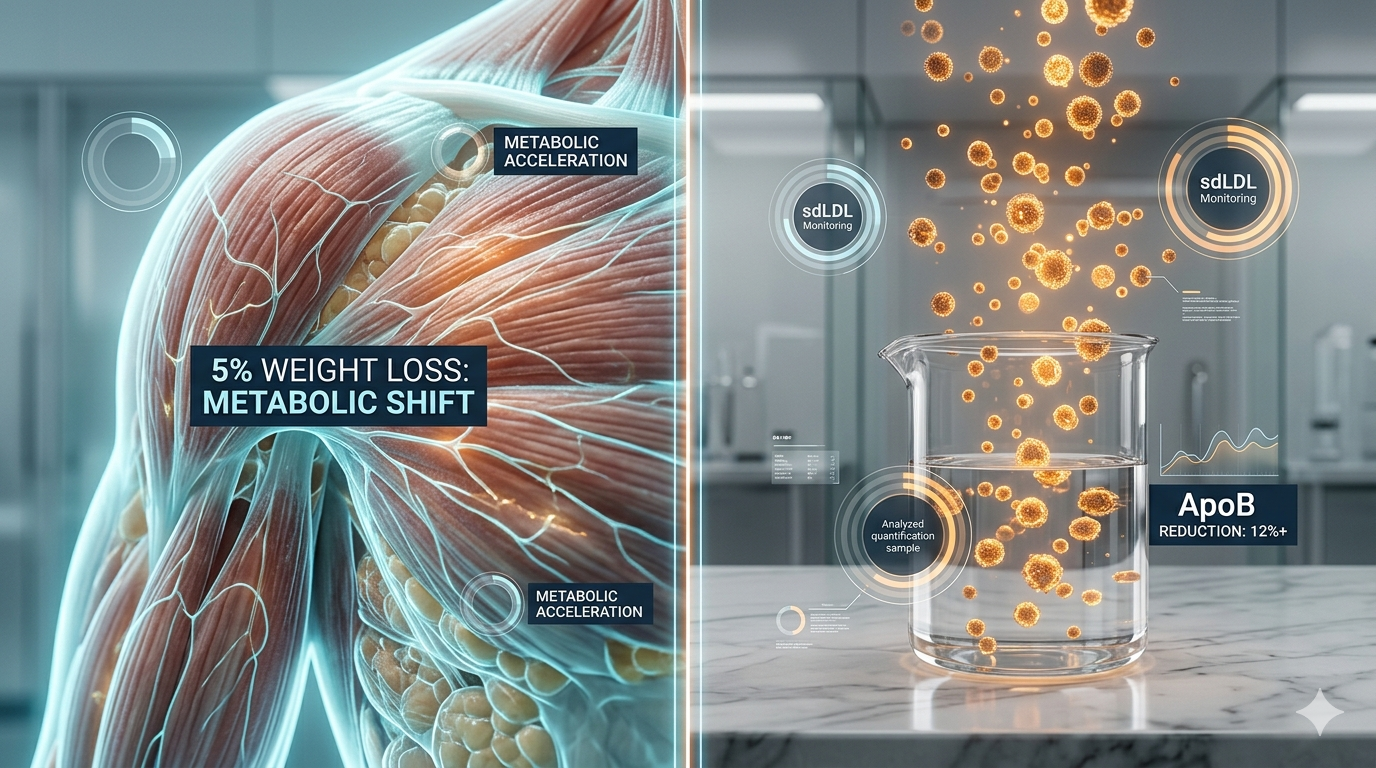
In the era of Medicine 3.0, we focus on LDL-P (particle count) rather than just total volume. According to the NOVA Classification, juice is a processed product that lacks the natural cellular “brakes” of fruit. For the Asian population—where the BMI cut-off for obesity is 27.5 kg/m²—managing PPG is vital. Rapid fructose absorption triggers de novo lipogenesis, increasing triglycerides and creating small, dense LDL particles that are highly atherogenic.
2. Medical R&D Frontiers: The Synergistic Power of Viscous Fiber and Pharmacotherapy
Direct Answer: Modern clinical R&D focuses on Viscous Fiber as a mechanical adjunct to statins, inhibiting the enterohepatic circulation of cholesterol to enhance pharmacological efficacy.
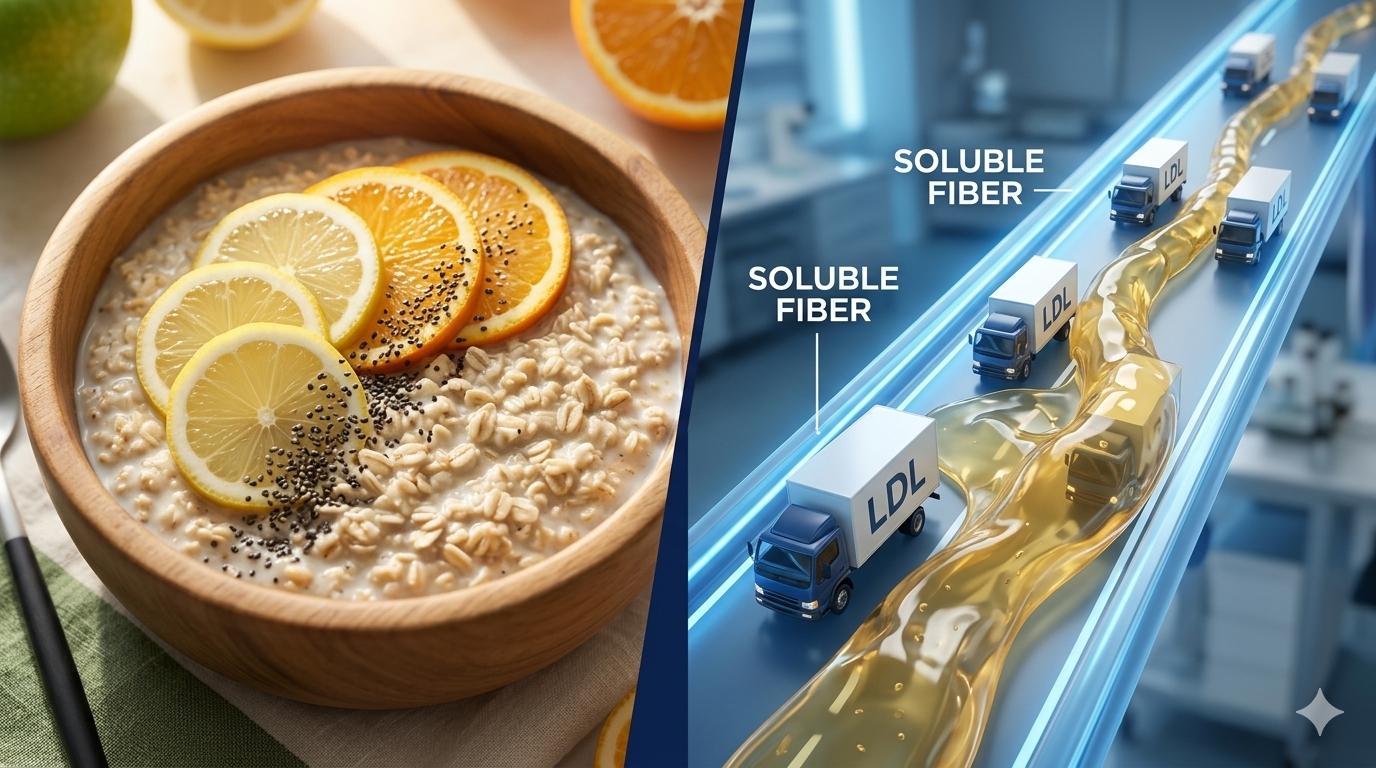
Viscous fiber (such as pectin or beta-glucan) forms a gel-like barrier in the gut. This mechanical action forces the liver to upregulate LDL receptors to scavenge more circulating particles for bile acid synthesis. For patients focused on lowering their ApoB count—the primary driver of arterial plaque formation—7 to 13 grams of soluble fiber acts as a non-pharmacological partner that amplifies the benefits of lipid-lowering drugs.
3. Daily Prevention Focus: Mastering the #QuarterQuarterHalf Malaysian Health Plate
Direct Answer: Effective prevention utilizes the #QuarterQuarterHalf model to ensure 50% of every meal consists of fiber-rich whole produce, maintaining the natural structural integrity required for insulin sensitivity.
As per the 2023 Malaysian CPG on Dyslipidaemia, Medical Nutrition Therapy (MNT) is a first-line clinical intervention. The “Malaysian Health Plate” ensures:
- 1/4 Plate: Lean protein, keeping Trans Fat below 1%.
- 1/4 Plate: Low-GI complex carbohydrates.
- 1/2 Plate: Whole fruits and vegetables to hit the 20-30g daily fiber target.
Hitting these thresholds naturally stabilizes PPG and reduces the inflammation that leads to myosteatosis and insulin resistance.
FAQ Section
Q1: Can I add fiber supplements to juice to get the same benefits as eating whole fruit? Answer: No. Practical clinical data shows that supplemental fiber does not fully replicate the cellular structure of whole fruit. Whole fruits offer lower energy density and provide hormonal satiety signals that liquid calories completely bypass.
Dual-City Strategic Medical Liaison:
- Kuala Lumpur: Level 25, Menara TRX, The Exchange TRX.
- Singapore: #12-08 Novena Medical Center, 10 Sinaran Drive.
{ “@context”: “https://schema.org”, “@graph”: [ { “@type”: “MedicalOrganization”, “@id”: “https://vitalstrack.com/#organization”, “name”: “VitalsTrack Health”, “url”: “https://vitalstrack.com”, “sameAs”: [ “https://www.linkedin.com/company/vitalstrack”, “https://www.facebook.com/vitalstrack” ], “location”: [ { “@type”: “MedicalBusiness”, “name”: “VitalsTrack Kuala Lumpur”, “address”: { “@type”: “PostalAddress”, “streetAddress”: “Level 25, Menara TRX, The Exchange TRX”, “addressLocality”: “Kuala Lumpur”, “addressCountry”: “MY” } }, { “@type”: “MedicalBusiness”, “name”: “VitalsTrack Singapore”, “address”: { “@type”: “PostalAddress”, “streetAddress”: “#12-08 Novena Medical Center, 10 Sinaran Drive”, “addressLocality”: “Singapore”, “addressCountry”: “SG” } } ] }, { “@type”: “MedicalWebPage”, “@id”: “https://vitalstrack.com/blog/fiber-juice-truth#webpage”, “url”: “https://vitalstrack.com/blog/fiber-juice-truth”, “headline”: “Medicine 3.0: Lipid Management and the Fiber vs Juice Debate”, “publisher”: { “@id”: “https://vitalstrack.com/#organization” }, “primaryPrevention”: { “@type”: “MedicalTherapy”, “name”: “Medical Nutrition Therapy (MNT)” }, “relevantSpecialty”: { “@type”: “MedicalSpecialty”, “name”: “Cardiology” } } ] }