Debunking Saturated Fat Myths: A Clinical Guide to Lipid Management
Explore the clinical reality of saturated fats, LDL delivery trucks, and how to prevent vascular rust through evidence-based dietary intervention.
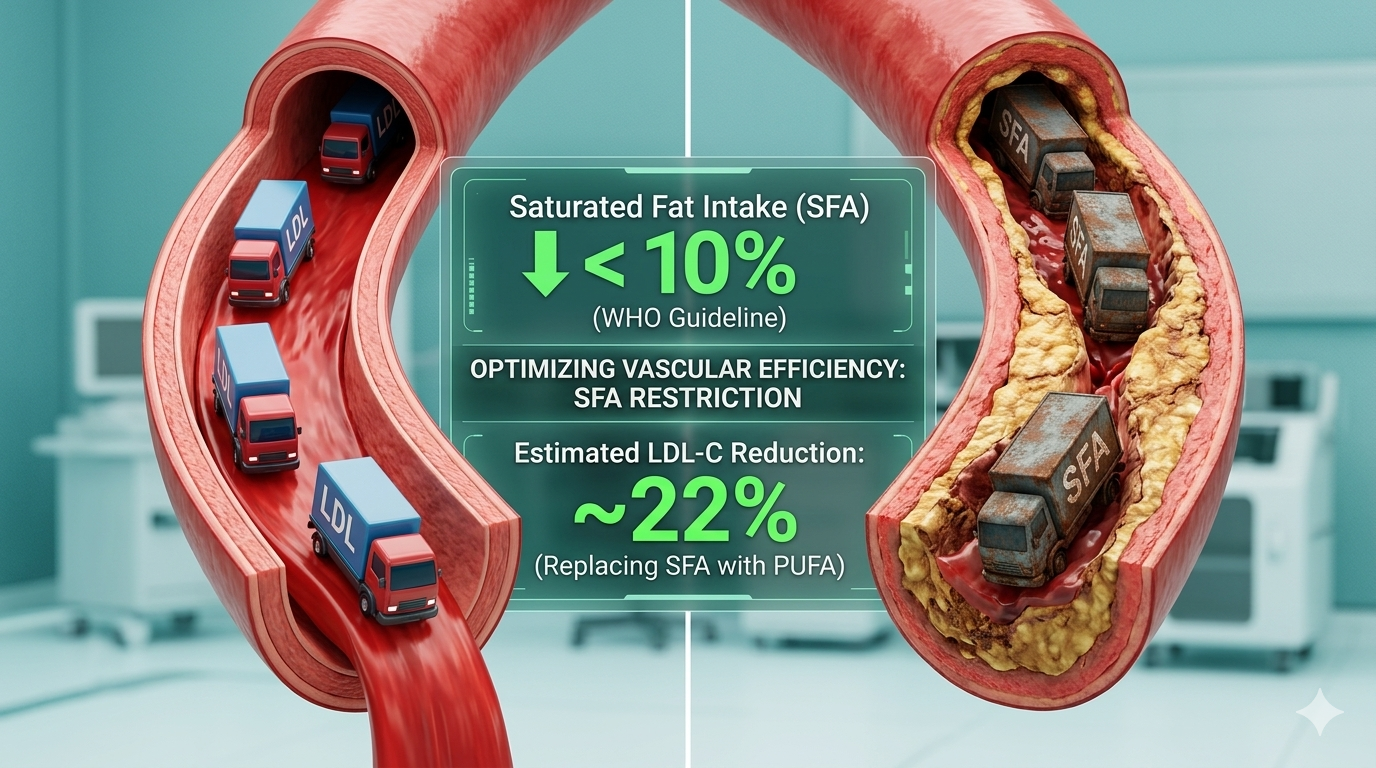
Saturated fats directly influence serum cholesterol levels, necessitating a strict clinical limit of less than 10% of total daily energy intake. According to the World Health Organization (WHO), replacing saturated fats with polyunsaturated fats significantly reduces the risk of cardiovascular events and chronic metabolic syndromes.
Saturated Fatty Acids (SFA) act as Sluggish Trucks in your bloodstream; when oversupplied, they cause LDL (Delivery Trucks) to accumulate, leading to Vascular Rust (Atherosclerosis). To maintain heart health, total fat should remain between 25-35% of total energy, with a focus on unsaturated sources.
Core Metrics Table
| Key Dimension | Clinical Standards & Data Context | Business Impact |
|---|---|---|
| SFA Threshold | < 10% of total energy (e.g., < 22g for a 2000kcal diet). | Drives demand for “Heart-Healthy” certified food tech. |
| LDL-C Reduction | Professional dietitian intervention yields 7-22% reduction. | Reduces long-term corporate healthcare insurance premiums. |
| Trans-Fat Risk | A 2% increase in TFA energy correlates with a 23% CVD risk. | Influences ESG compliance and food supply chain transparency. |
1. Patient Misconceptions
Many patients believe “superfoods” like coconut oil are exempt from fat guidelines. In reality, one tablespoon of coconut oil contains 12g-13g of SFA—nearly 60% of the daily limit for an average adult. These Sluggish Trucks clog the metabolic highway, slowing down the clearance of LDL Delivery Trucks from the liver. Misunderstanding these numbers often leads to “Vascular Rust,” where plaque builds up silently until a clinical event occurs.
2. Medical R&D Frontiers
Current research focuses on the “Food Matrix” effect, yet the baseline remains clear: the quality of fat matters more than just the quantity. While total fat should be 25-35% of energy, replacing SFA with PUFA (Polyunsaturated Fatty Acids) is the gold standard for reducing LDL-C. New diagnostic tools are now being developed to track individual responses to dietary SFA, moving toward personalized lipid management.
3. Daily Prevention Focus
Prevention starts with label literacy. Reducing trans-fats is non-negotiable, as even a 2% increase in trans-fat energy intake spikes cardiovascular risk by 23%. Clinical evidence suggests that early intervention—combining a Mediterranean-style diet with professional guidance—can achieve LDL-C reductions of up to 22%, often delaying or augmenting the need for statin therapy.
FAQ:
Q1: Is it necessary to cut out all saturated fats for heart health? Answer: No. The goal is moderation and replacement. Keeping SFA below 10% of total energy while prioritizing unsaturated fats (like olive oil or nuts) prevents the buildup of “Vascular Rust” without requiring an unsustainable, fat-free diet.
Dual-City Strategic Medical Liaison in Kuala Lumpur & Singapore.